
How to Communicate Change to Apartment Residents During Property Transitions
Change is part of apartment community operations. Construction, ownership changes, and management transitions happen at every stage of a property’s life cycle.
What causes resident frustration isn’t the change itself; it’s unclear, inconsistent communication during the change. No one wants to live in a place where they don’t know what’s going on.
This Week’s “Try It” — Communicating Change During Transition
This ‘Try It’ focuses on how to communicate change clearly and calmly, even when you don’t have all the answers yet.
It introduces a simple, repeatable framework that helps onsite teams navigate potentially difficult conversations with more confidence and less stress.
In Case You’re New Here… On Multifamily Mix, we share a ‘Try It’ in each episode. It’s one practical idea based on real onsite experience. No fluff. Just helping you take small actions to build strong communities.


Communicate Clearly Every Month, With Ease - The Spark Monthly Resource Kit
12+ resources created for property managers on a budget. Because you deserve support no matter what your budget is!
The Problem With How Change Is Usually Communicated
When communities go through transition, communication often falls into one of two traps:
Waiting until everything is finalized before saying anything
Over-communicating without actually addressing resident concerns
Both approaches create uncertainty and real frustration. Residents don’t expect perfection, but they do expect clarity about what applies to them. Especially when it comes to where they live.
A Simple Framework for Communicating Change
Every message you share during a transition should clearly answer three questions:
What’s changing
What’s not changing
What residents can expect next
This framework works whether you’re sending an email, posting in the resident portal, or answering questions in person, in the office, or around the community.
It gives your team a steady structure when conversations feel unpredictable.
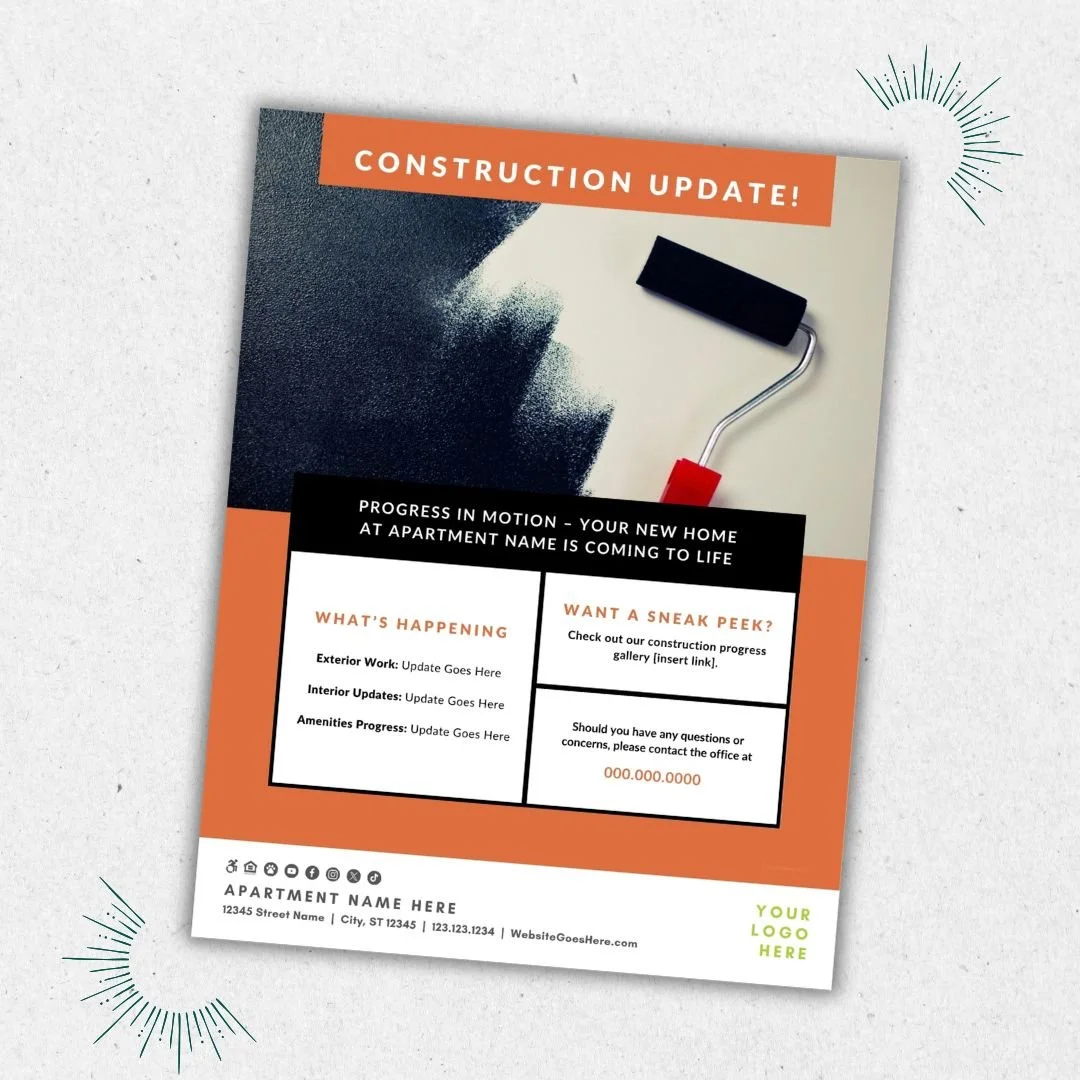
To access these design templates, join the Sprout Membership HERE
How to Apply the Framework Onsite
1. Clearly state what’s changing
Name the transition directly and calmly, and as much as you can, avoid vague language. Residents already sense change; acknowledging it builds trust.
So instead of being vague or avoiding it, just say “we’re starting some construction/renovations”, “ownership of the community is transitioning right now”, or “we’re having a change in management”.
Tell them exactly what the change is without the fluff.
2. Reassure residents about what’s not changing
This is the most important part of the message.
Residents want to know that core elements of their experience remain stable, especially during uncertainty.
Make sure you address things like:
Lease terms
Rent payments
Maintenance processes
Day-to-day support
Clear reassurance about things that your residents feel will directly impact them helps prevent assumptions and reduces anxiety.
3. Set expectations for what happens next
Even when details are limited, residents need predictability.
Make sure you’re communicating details such as when updates will be shared, where information will be posted, and who to contact with questions.
Consistent updates build confidence, even when there’s nothing new to report.
Let’s do a quick scenario walkthrough…
⭐️⭐️⭐️⭐️⭐️
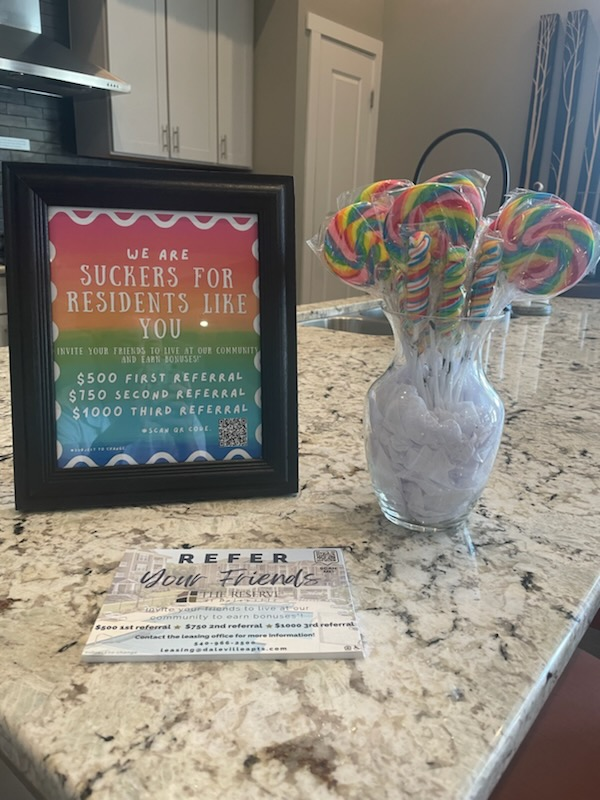
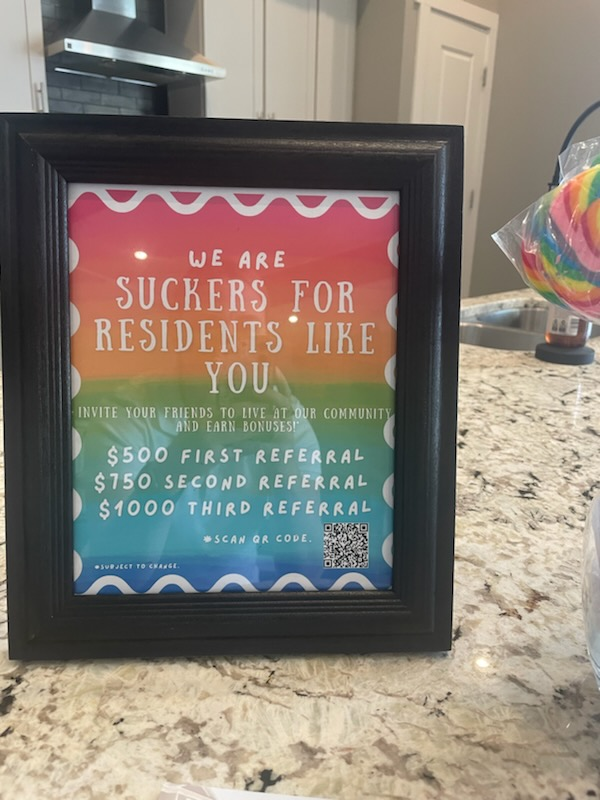
"I wanted to share with you the Suckers for Referrals flyer and candy vase we created here. We appreciate Sprout making it easy for us to design these type of flyers for our events and marketing."
Amanda | Property Manager
Management Change
New Management | Transition in Progress
Resident:
“I saw something about a new management company. Should I expect changes?”
Team:
“Yes, we are transitioning to a new management company, and during any transition, there can be some adjustments. What’s changing is who oversees the community, and, over time, you may see updates to certain processes. What won’t change is that your current lease remains in place, rent payments continue as outlined in your agreement, and maintenance requests are still being addressed. Our focus right now is on making the transition as smooth as possible for residents. What you can expect is clear communication from us as things evolve, including advance notice if any changes impact residents directly.”
Why this works:
It acknowledges that change may happen without creating fear, reinforces legal and operational stability, and commits to communication instead of perfection.
Social Media Update
Photo ideas: team at the office, leasing desk, community spaces, welcome signage
Caption Option 1
“Our community is in a management transition, and our focus is on clear communication and a smooth experience for residents.”
Caption Option 2
“Change is happening behind the scenes, and we’ll continue to keep residents informed as we move through the transition.”
Caption Option 3
“During times of transition, our priority remains supporting our residents and communicating clearly along the way.”
Why This Approach Works
This framework works because it:
Acknowledges uncertainty without sounding unprepared
Keeps residents focused on what’s stable
Reduces repetitive questions
Prevents rumor escalation
Protects trust during transition
Residents don’t need exact timelines. They need consistent communication.
Get Ideas and Inspiration In Your Inbox Every Week
Real-life inspo and ideas for property managers
A little pick-me-up that usually isn’t about work at all!
Want More Real-World Scenarios?
Sprout members get access to:
Additional conversation examples for ownership changes, management transitions, and renovations at occupied communities
Guidance on handling difficult follow-up questions
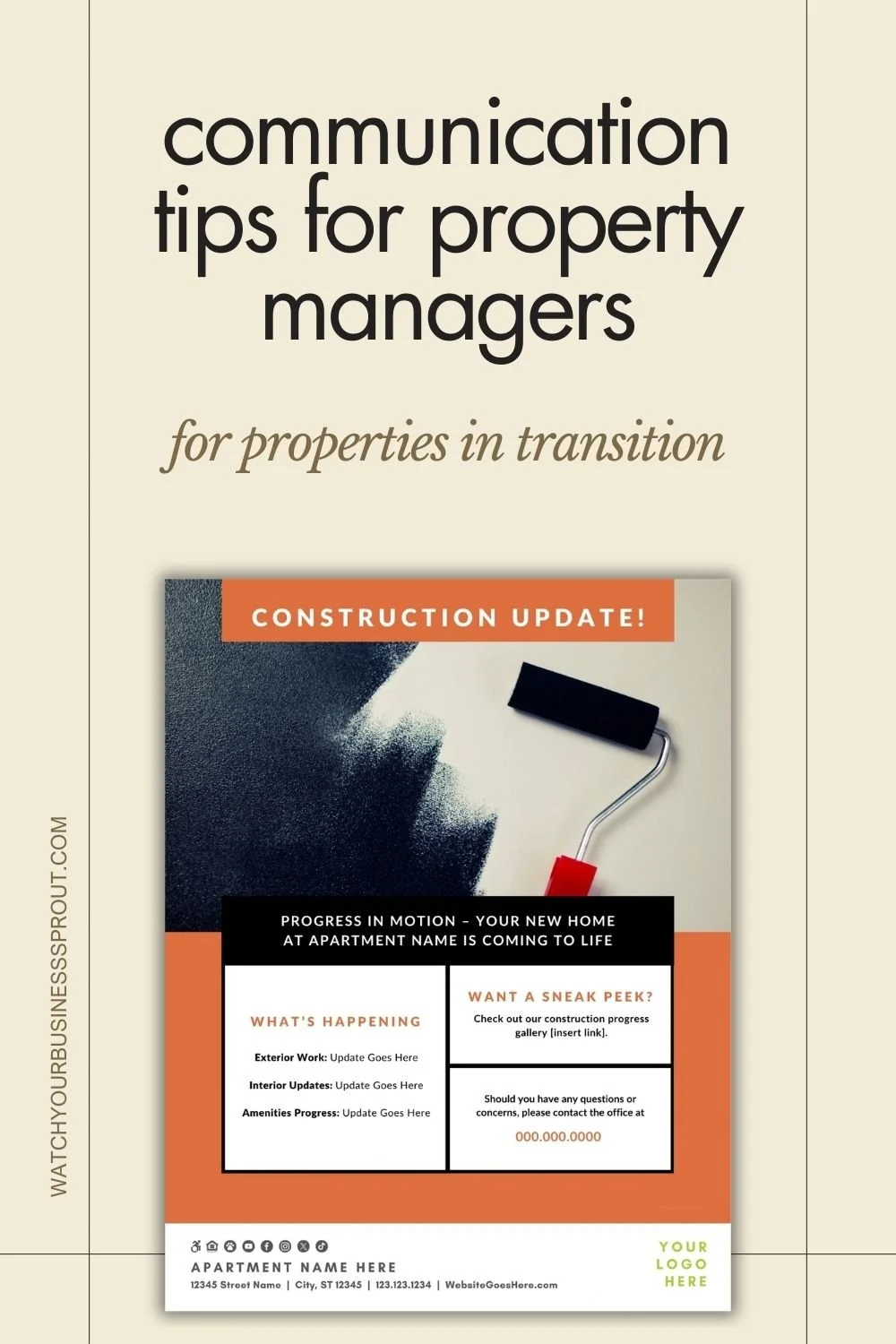
A ready-to-use Updates Newsletter Canva template that helps teams apply this framework consistently
The framework is the strategy. Sprout membership helps you apply it confidently, again and again.
You can learn more HERE.